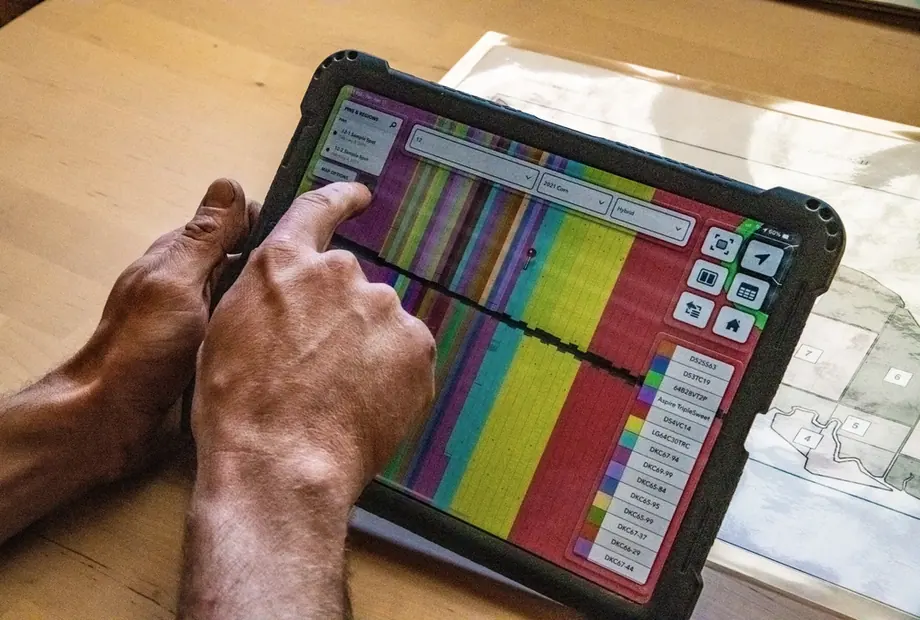
What computer vision actually sees in a stressed leaf
Draft: a launch-seed article. It reflects our genuine approach and contains no invented results.
Chlorosis, lesions, wilting, mottling — the visual signatures of stress are real, consistent, and learnable. Here is a plain-language tour of how our models read a canopy.
Stress has a look
A healthy canopy has a characteristic colour, texture, and structure. Stress changes those in patterned ways: yellowing between veins points one direction, brown lesions another, a limp canopy another still. Humans read these cues instinctively; computer vision learns them from labelled examples.
Classification and segmentation
Verdyn uses two complementary kinds of model. Classification answers "is this plant showing a stress signature, and which one?" Segmentation draws the boundary — which pixels, which plants, how much. Together they turn a photo into a map.
Change over time
One flight is a snapshot. Several flights are a story. A change-detection layer compares them to show whether a hotspot is spreading or settling — often the most decision-relevant signal of all.
Why it keeps improving
Every field that is labelled and confirmed strengthens the models. Accuracy is not fixed; it compounds as the dataset grows.
This is a launch draft. Model details will be expanded as coverage grows.
Written by the people building Verdyn's detection models and working with partner organisations in the field.
Keep reading
Why catching crop disease early changes the whole season
Most yield loss to disease is decided in the first days after onset. Here is why plant-level detection beats blanket spraying — and how to act on what you find.
Drone or phone? Choosing the right imagery for your fields
You do not need an expensive rig to get useful crop imagery. A practical look at when a phone walk-through is enough and when a drone flight pays for itself.